Research / 2026

Open questions, held to evidence.

Four programs run in parallel: making inference small and cheap enough to own, understanding what actually makes software agents reliable, testing whether representation and reasoning can be separated from scale, and designing interfaces that keep a person in command of all of it.

One question, asked four times.

The software-engineering work is not a set of unrelated studies. Each one answers the objection raised by the one before it, and the map below is the route we actually took.

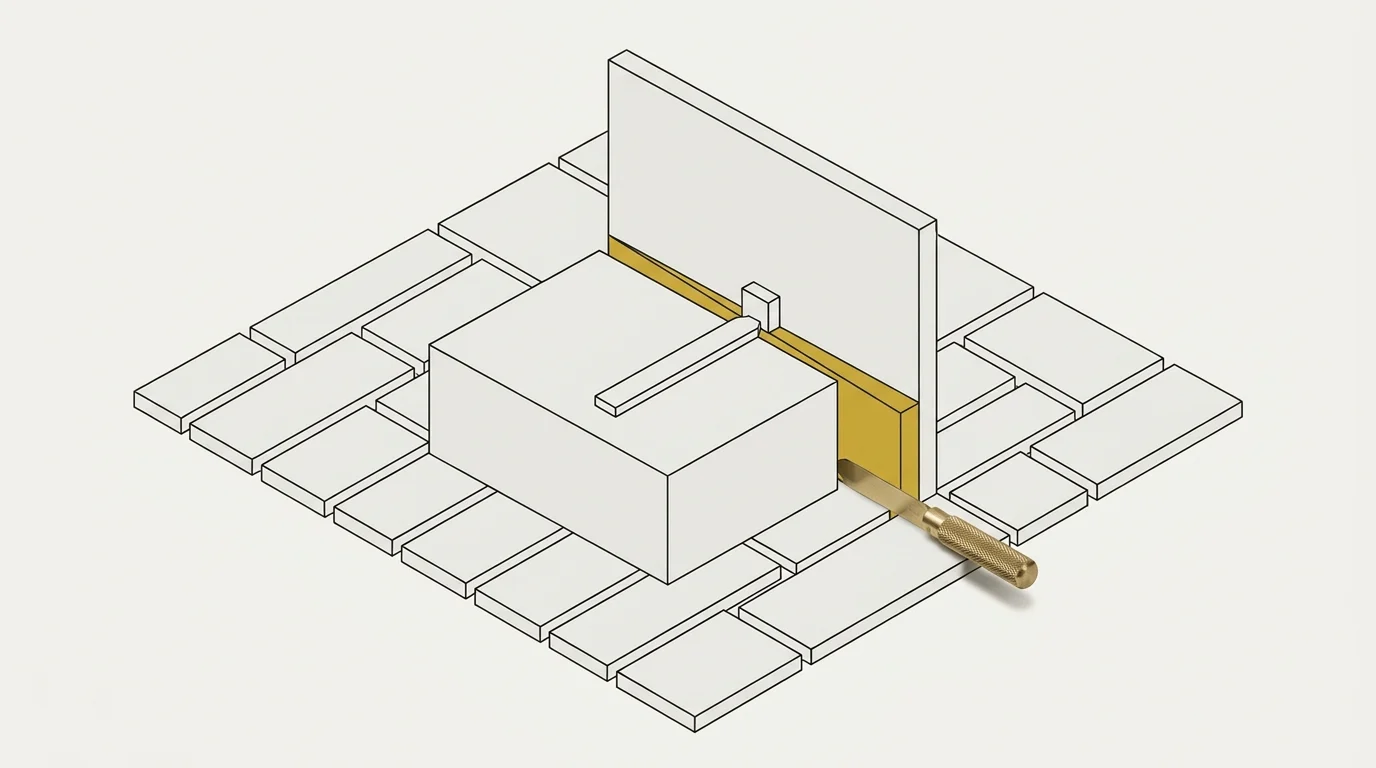
A technical map of the research arc: a track crossing a split block, entering a narrowing funnel, passing beneath a gate, and ending in a return loop, with a surveyor's level sighted along it.
  1. 01Gap

    When an agent writes its own tests, the grader is the thing under test. Measured against held-out oracles, residual false accepts survive every condition.

  2. 02Context

    If verification cannot be trusted on its own, what does the agent actually need in order to act correctly in the first place? Representation, held against real issue resolution.

  3. 03Test-first

    Write the failing test before the code and let execution, not the model, decide. The gate moves out of the model's judgement and into the build.

  4. 04Refinement

    One pass is not enough. What survives repeated correction, what regresses, and what a system should retain between attempts so the next pass starts further along.

Five studies.

Agentic software engineering, agentic memory, and the data structures underneath both. Each paper states its own method, its own limits, and the noise floor it had to clear.

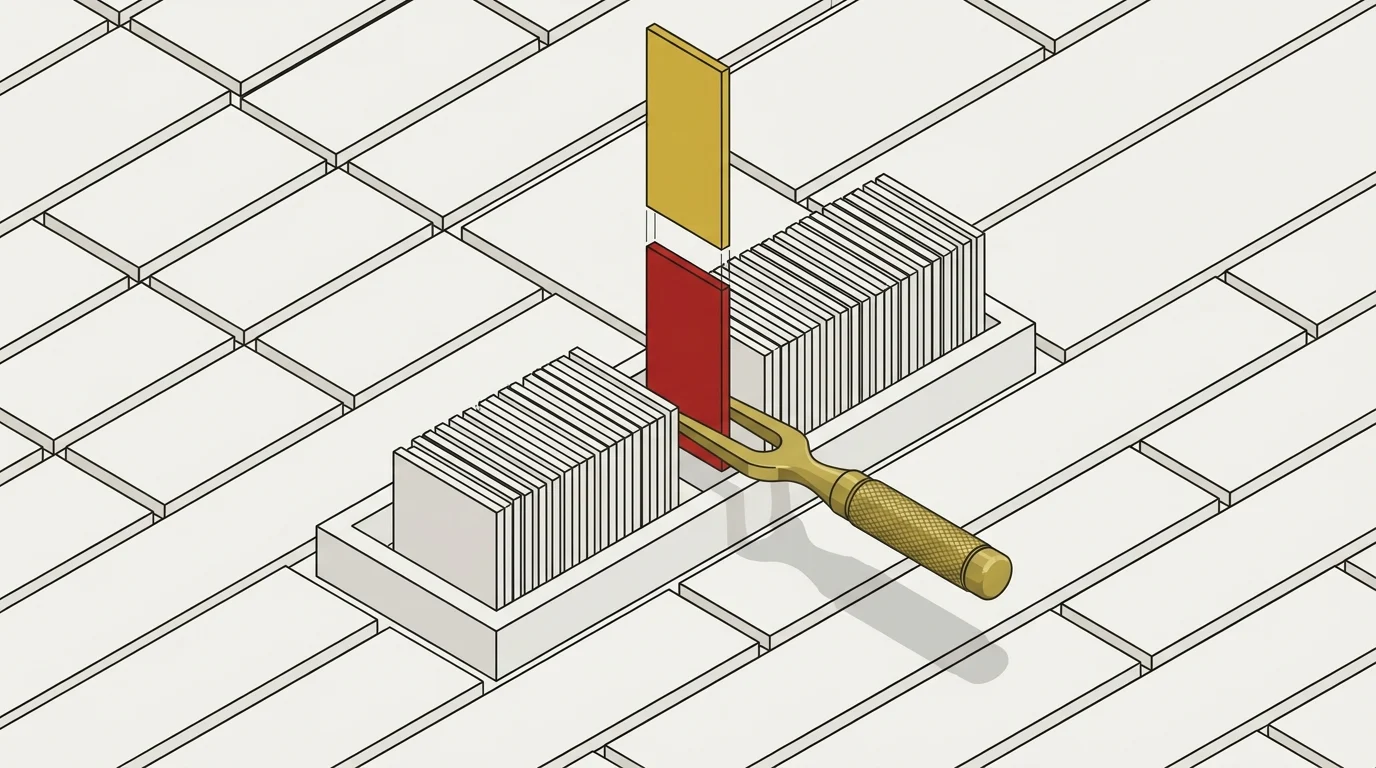
A tray of blank filing slips with one slot standing empty: a red slip drawn out in the fork of a brass extractor, a gold slip descending into its place.

Paper 003Memory

CANTOR — Admission-Time Supersession for Current-Fact Question Answering

Conflict resolution in agentic memory. When a stored fact is replaced by a newer one, does the pipeline notice at admission time? Matched-question outcomes across repeated fact-consolidation runs, with a retrieval-transfer diagnostic and semantic conformance cases.

Empirical studyRepository private

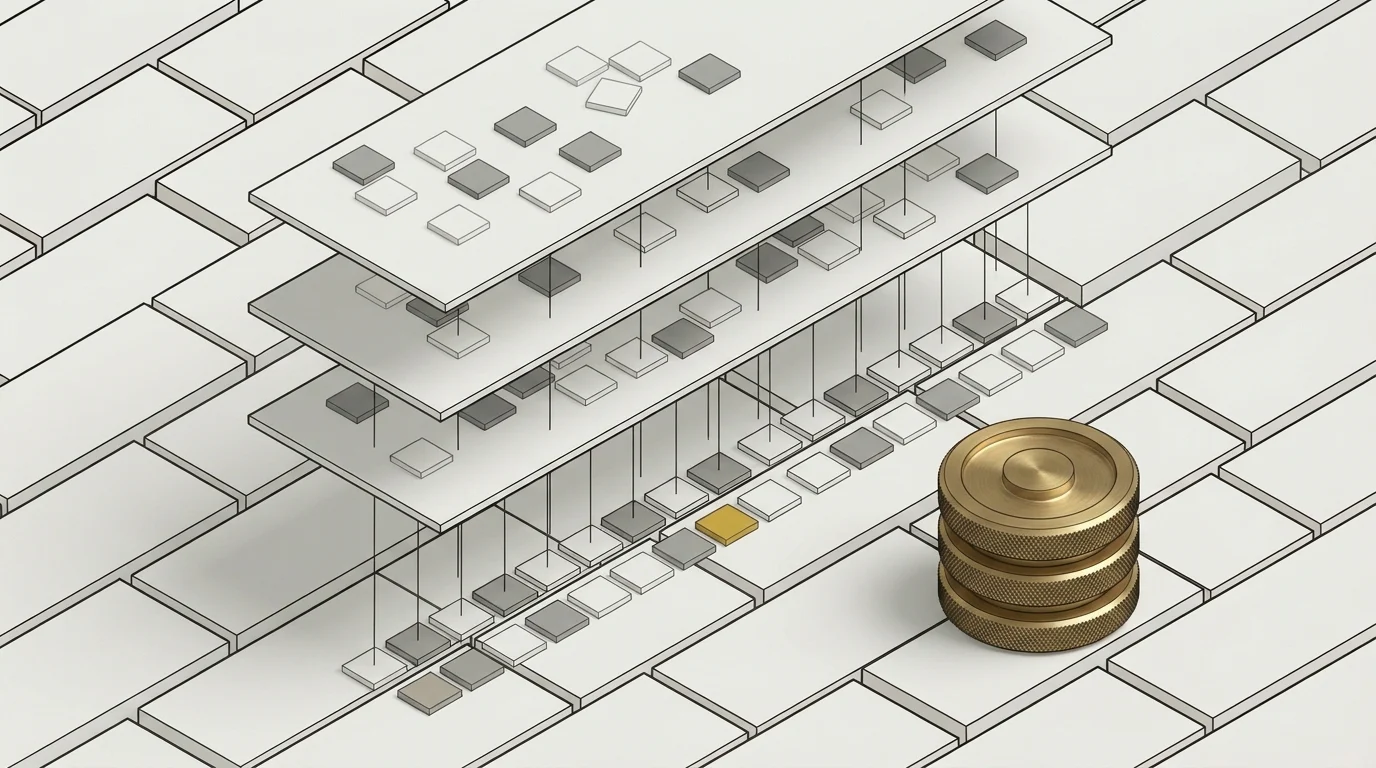
Three floating panels carrying differently jumbled tiles, each tile dropping on a fine line into one identical evenly spaced row below, beside a stack of brass weights.

Paper 004Memory

Agentic Memory Frontier Research and Product Development

What an agent should remember, and how that knowledge stays correct as it changes: convergence across replicas, supersession of stale facts, and the storage that makes both practical. The findings go straight into the open memory layer and the products built on it.

Research + productRepository private

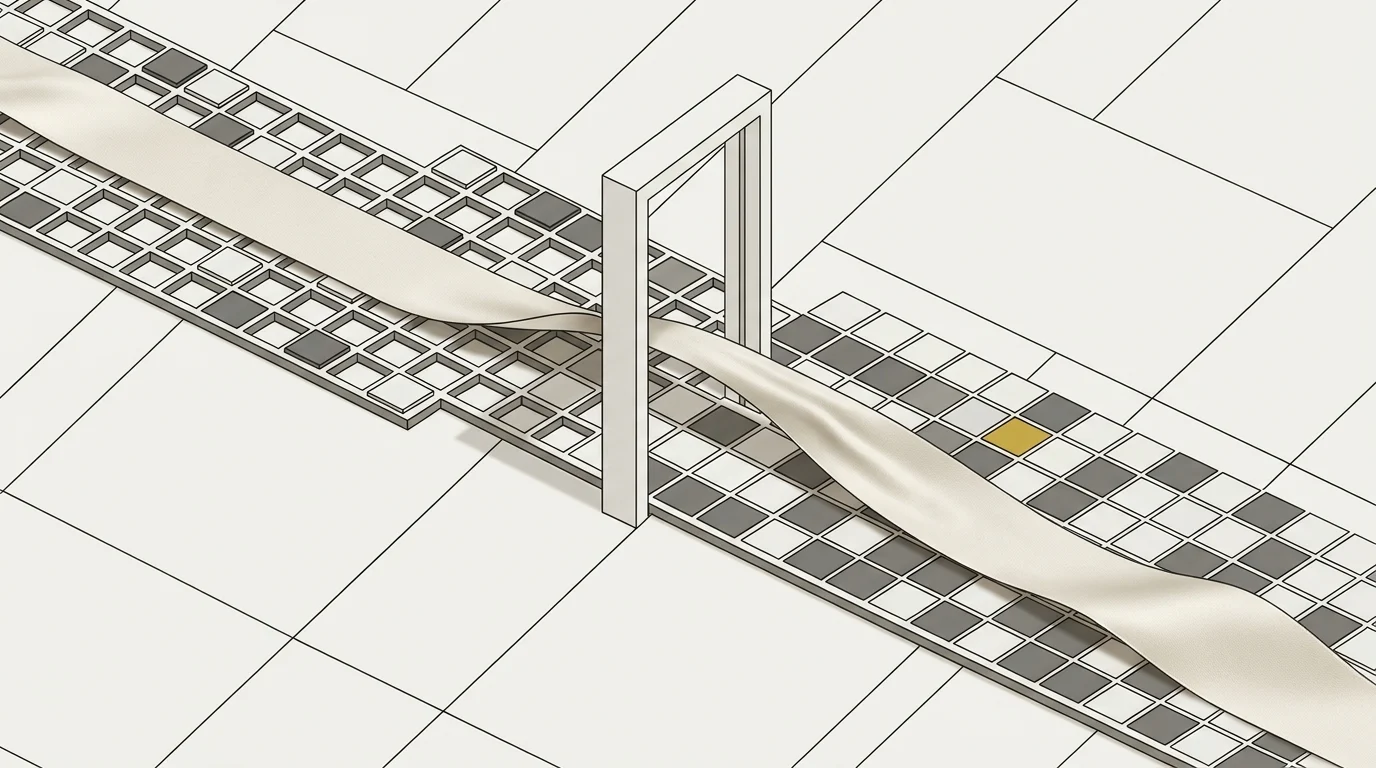
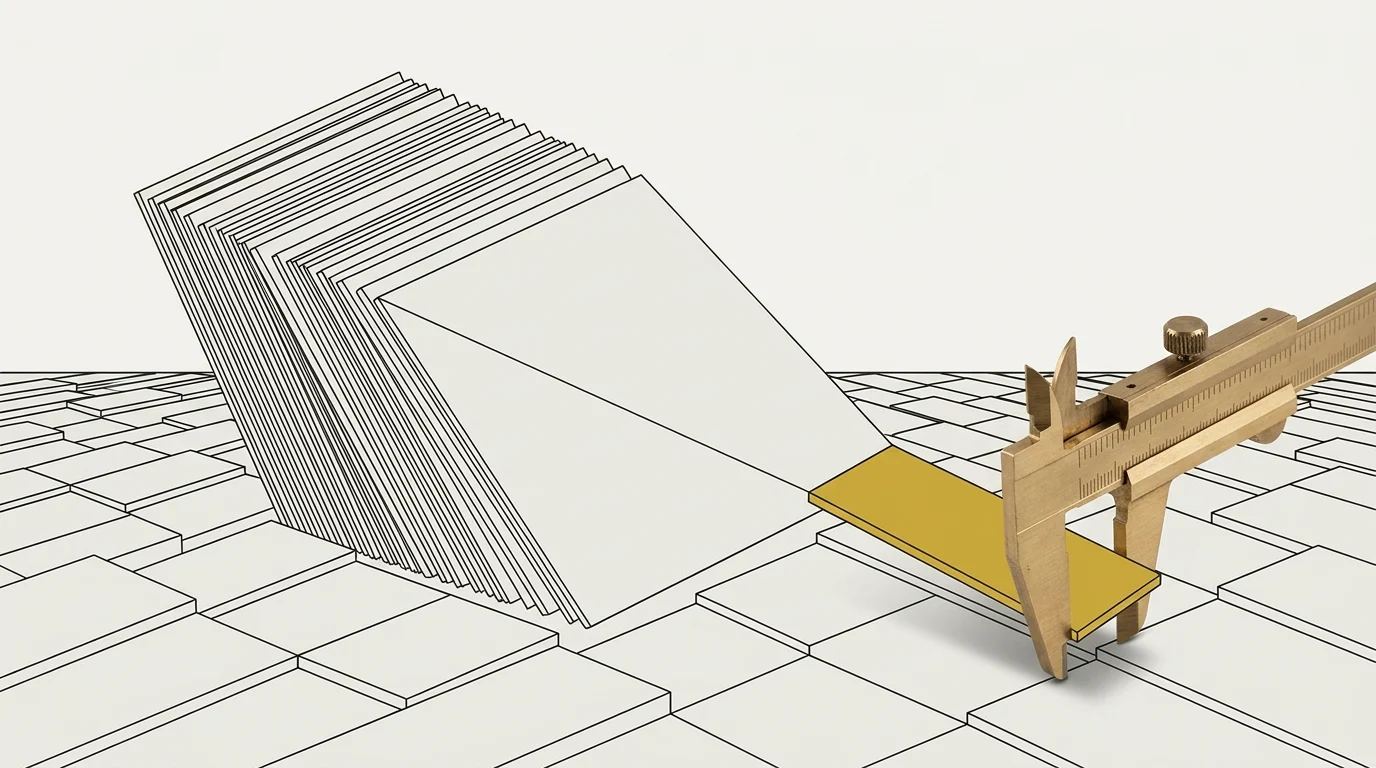
A lattice of square cells, loose and full of holes on one side of an upright frame and densely packed on the other, with a satin ribbon drawing tight as it passes through.

Paper 005Data structures

Ribbon Catches Bloom: Pleated Construction at Bloom Speed

Ribbon filters are space-optimal but slow to build. Pleated construction — a one-pass reordering inside a cache window — builds them at close to Bloom-filter speed, roughly twice as fast as building in arrival order at scale. The result is language-neutral; the companion Rust implementation is pleat, with an upstream patch to RocksDB in preparation. Every published number traces to committed benchmark data through a claims ledger.

Benchmarked

What each program is trying to settle.

The aim is not to make autonomous systems appear more capable. It is to identify what they actually need, measure what they actually do, and build boundaries that let people trust the useful parts.

R—01

Applied AI

Can inference be made small, local, and power-conscious enough that ordinary systems own it outright? The work spans efficient execution inside the JVM, small and vertical models, mixture-of-experts optimization, and intelligent routing — including a qualification standard for models and a channel for publishing and distributing them. Vectors, models, and memory are the instruments; they ship as open source.

R—02

Agentic software engineering

What makes a coding agent reliable, and how would we know? Three threads: providing the optimal context for the task, closing the gap between natural-language requirements and formal testable ones, and agentic memory that persists across sessions. Findings feed directly into moobi.dev, where they become a production workflow.

R—03

Frontier questions

Four open questions we think are worth the risk of being wrong about. Can an embedding's meaning be universal — an atom of knowledge that survives being encoded by a different model, classified, and shared? Can reasoning be separated from parametric knowledge far enough that a condensed core, given the right tools, approaches frontier capability? Can mixture-of-experts modules be shared between small models, with the KV cache doing part of the work? And can a common conceptual latent space be shown to emerge across independently trained models? Several interchange formats have been proposed for that middle layer; we intend to test them rather than assume them.

R—04

Human–agent interfaces

Agents got fast before their interfaces got honest. We are exploring what an operating system for agents looks like when the canvas morphs to the task rather than the app — naked objects for the agentic era — and what a harness has to do to bring sanity back to fast development: slow the machine down, speed the human up, and stop at the right moment to show the progression rather than asking for trust. A parallel experiment builds learning paths from what a person saves, rendered as a subway map whose stations become scheduled audio.

Research should end in working software.

Findings move through a deliberate loop. Experiments clarify the constraint, open tools make the mechanism inspectable, and products make the validated workflow accessible. Anything that does not survive the measurement stays in the lab.

01ObserveIsolate a consequential unknown.
02MeasureRun controlled, reproducible trials.
03ReleaseOpen the useful instrument or foundation.
04ProductizeTurn evidence into a repeatable workflow.

Toward biological intelligence.

The lab's remit already includes non-LLM artificial intelligence and general computer science — database architecture, storage systems, indexing, retrieval, data structures, and the less glamorous mechanisms that make intelligent software dependable.

Further out, the intent is explicit: doctoral work in neuroscience, and a research organization built with computer scientists and neuroscientists together, in the spirit of what Numenta set out to do. The conviction behind every program on this page is that the current architecture is not the last one, and that the next one will be argued for from how brains actually work.

Discuss research collaboration ↗

Open channel

Have a hard problem worth proving?

info@integrallis.com